US Economy Updates: Latest Trends, Market Changes, and What They Mean for the Future

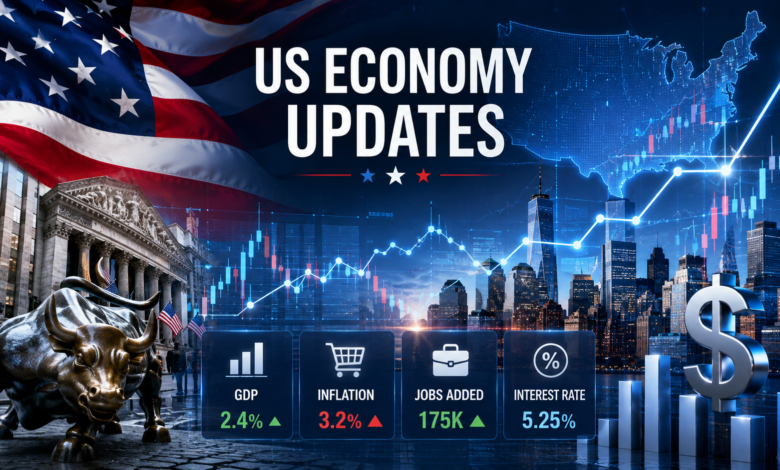
The US Economy Updates States economy continues to attract global attention because of its size, influence, and connection with almost every major market around the world. From inflation and interest rates to employment, consumer spending, technology investments, and business growth, every economic movement in the US can create effects far beyond American borders.
Recent US Economy Updates show a mixed picture. On one side, the economy has remained more stable than many analysts expected, with continued business activity, strong investment in technology, and steady consumer demand. On the other side, challenges such as inflation pressure, higher borrowing costs, slower job growth, and uncertainty in global markets continue to create concerns for policymakers and businesses.
Understanding these economic changes is important not only for investors and companies but also for ordinary people who are affected by prices, employment opportunities, housing costs, and daily expenses. This article explores the latest developments in the US economy, the major factors influencing growth, and what experts are watching in the coming months.
Current State of the US Economy
The US Economy Updates remains one of the strongest and most closely monitored economies in the world. Despite facing several challenges in recent years, including inflation shocks, interest rate increases, supply chain problems, and global uncertainty, economic activity has continued at a moderate pace.
Recent economic data indicates that growth has slowed compared with previous periods but has not entered a severe downturn. The US Gross Domestic Product (GDP), which measures the overall value of goods and services produced in the country, continues to show expansion. According to the Bureau of Economic Analysis, real GDP increased at an annual rate of 1.5% in the second quarter of 2026, following stronger growth earlier in the year.
This slower but positive growth pattern suggests that the economy is moving through a balancing phase. Consumers are still spending, businesses are investing, and employment remains relatively stable, but higher costs and financial pressures are influencing decisions.
One important feature of the current US economy is resilience. Many economists previously expected aggressive interest rate policies to cause a sharp slowdown, but businesses and households have adapted. Companies have focused on improving efficiency, adopting technology, and managing costs to maintain profitability.
However, economic strength does not mean all challenges have disappeared. Different sectors are experiencing different conditions. Some industries are expanding rapidly, while others are dealing with weaker demand and higher operating expenses.
Inflation Trends and Price Pressure
Inflation remains one of the biggest topics in current US Economy Updates. Although inflation has improved compared with the extreme levels seen after the pandemic period, prices remain higher than many consumers would prefer.
The Federal Reserve continues to closely monitor inflation because its main goal is to maintain price stability while supporting employment. Recent reports indicate that inflation pressures are still present, especially in areas such as energy, transportation, healthcare, and goods affected by supply costs.
For American households, inflation affects everyday decisions. Rising prices for groceries, housing, insurance, and services influence how people manage their budgets. Even when inflation slows, consumers often continue feeling pressure because prices do not usually return to previous levels.
Businesses are also dealing with changing costs. Companies must decide whether to absorb higher expenses or increase prices for customers. Many businesses have become more cautious because consumers are becoming more sensitive to price increases.
The Federal Reserve faces a difficult challenge. If interest rates remain high for too long, economic growth could weaken. However, reducing rates too quickly could create new inflation problems. Finding the right balance is one of the biggest economic decisions facing policymakers.
US Economy Updates S Job Market and Employment Updates
The American labor market has been a major source of economic strength in recent years. Employment levels have remained relatively healthy, but recent updates show signs that hiring momentum is slowing.
Private payroll growth slowed in August 2026, with US Economy Updates adding fewer jobs than expected. The slowdown was visible in several industries, although sectors such as healthcare, construction, and financial services continued to show employment gains.
A slower job market does not necessarily mean an economic crisis. Instead, it may indicate that the labor market is moving from a period of unusually strong hiring into a more normal environment.
Companies are becoming more selective with hiring decisions because of economic uncertainty, higher interest rates, and changing business conditions. Some organizations are focusing more on productivity improvements and automation rather than expanding their workforce quickly.
Technology, especially artificial intelligence, is also influencing employment discussions. While many people are concerned that AI could replace jobs, current data has not shown a clear connection between AI adoption and widespread job losses. Instead, many companies are using technology to improve efficiency and create new types of roles.
The future of employment will likely depend on how US Economy Updates balance technology investment with workforce development.
Federal Reserve Interest Rate Decisions
The Federal Reserve plays a central role in shaping the US Economy Updates. Through interest rate decisions, the Fed influences borrowing costs, investment, consumer spending, and inflation.
Higher interest rates make borrowing more expensive for individuals and businesses. Mortgage rates, business loans, and credit costs increase, which can slow economic activity. However, these policies are used to control inflation and prevent prices from rising too quickly.
Current economic discussions are focused on whether the Federal Reserve should maintain restrictive policies or make adjustments. Inflation remains a concern, but slower job growth has created a more complicated situation for policymakers.
The Fed must carefully analyze multiple economic indicators before making decisions. Employment reports, inflation data, consumer spending, and US Economy Updates activity all influence monetary policy.
For consumers, Fed decisions affect many parts of daily life. Lower interest rates could eventually make loans and mortgages more affordable, while higher rates could continue creating financial pressure.
Consumer Spending and Household Confidence
Consumer spending is one of the main engines of the US Economy Updates. Because household consumption represents a significant portion of economic activity, economists closely monitor how confident people feel about their financial situation.
Recent updates show that consumers are continuing to spend, but many are becoming more careful. Higher prices and borrowing costs have changed purchasing habits. People are prioritizing essential expenses and looking for better value when making purchases.
Retailers and service providers are adjusting to these changes by offering discounts, improving customer experiences, and focusing on affordability. Companies that understand changing consumer behavior are better positioned to succeed.
Consumer confidence is another important factor. When people feel secure about their jobs and income, they are more likely to spend. When uncertainty increases, they may delay major purchases such as homes, vehicles, or expensive products.
The housing market is a good example of this pressure. Higher mortgage rates have reduced affordability for many buyers, slowing activity in some areas. However, demand remains supported by limited housing supply in many regions.
US Economy Updates Investment and Technology Growth
One of the most important US Economy Updates is the continued growth of technology investment. Artificial intelligence, data centers, advanced manufacturing, and automation are becoming major drivers of business spending.
Companies across different industries are investing heavily in digital transformation. AI technology is being used for improving operations, analyzing data, reducing costs, and creating new products.
Manufacturing activity has shown continued expansion, although growth has become more cautious due to higher input costs and global uncertainty. Recent reports indicate that AI-related investment and business equipment demand are supporting certain parts of the manufacturing sector.
Technology investment could become a major source of productivity growth in the coming years. If companies successfully integrate new technologies, the economy could benefit from increased efficiency and stronger long-term growth.
However, challenges remain. Technology adoption requires skilled workers, infrastructure investment, and careful management. US Economy Updates must balance innovation with financial responsibility.
US Economy Updates Market Challenges
The US Economy Updates market remains one of the most discussed areas of the economy. High mortgage rates have created affordability challenges for many buyers.
When borrowing costs rise, monthly mortgage payments increase, making home ownership more difficult. Many potential buyers have delayed purchases, waiting for better market conditions.
At the same time, housing supply remains limited in many parts of the country. This shortage has supported home prices even as higher rates reduce demand.
Builders and developers are adapting by focusing on different types of housing projects and finding ways to reduce costs. However, affordability remains a major issue for many American families.
Future US Economy Updates trends will depend heavily on interest rate changes, employment conditions, and construction activity.
Global Factors Affecting the US Economy
The US economy does not operate independently. International events, trade policies, energy markets, and geopolitical developments can influence economic performance.
Energy prices are especially important because they affect transportation costs, business expenses, and consumer prices. Global conflicts and supply disruptions can create additional inflation pressure.
Trade policies also play a major role. Tariffs and changes in international relationships can affect manufacturing costs, supply chains, and product prices.
Despite these challenges, the US economy benefits from its large consumer market, advanced financial system, strong technology sector, and diverse industries.
US Economy Updates continue to monitor global developments carefully because international conditions can quickly change economic expectations.
Future Outlook for the US Economy
Looking ahead, the US economic outlook remains a combination of opportunities and challenges. Growth is expected to continue, but the pace may remain moderate as the economy adjusts to higher costs and changing financial conditions.
Experts are watching several important factors, including inflation trends, employment growth, Federal Reserve decisions, consumer confidence, and business investment.
Technology could become a major advantage for future growth. Artificial intelligence and automation may improve productivity and create new economic opportunities if implemented effectively.
However, policymakers must continue managing risks. Persistent inflation, financial pressures, and global uncertainty could affect economic performance.
The future of the US economy will likely depend on how successfully businesses, consumers, and government institutions adapt to changing conditions.
Conclusion
The latest US Economy Updates reveal an economy that is strong but facing important challenges. Growth continues, businesses are investing, and employment remains relatively stable, but inflation concerns and financial pressures continue to influence decisions.
The United States has shown remarkable economic flexibility in recent years. Companies have adapted, consumers have adjusted, and policymakers have responded to changing conditions.
While uncertainty remains, the foundation of the US economy remains strong. Future progress will depend on managing inflation, supporting innovation, maintaining employment opportunities, and creating conditions for sustainable long-term growth.
For investors, businesses, and individuals, staying informed about economic developments is essential. The US economy continues to evolve, and the decisions made today will shape its direction in the years ahead.
FAQs About US Economy Updates
What is the current condition of the US economy?
The US economy is experiencing moderate growth with continued business activity, stable employment, and ongoing inflation concerns.
Is inflation still a problem in the US?
Yes, inflation has improved but remains above the Federal Reserve’s preferred target, making price stability a key priority.
How do interest rates affect the US economy?
Interest rates influence borrowing costs, consumer spending, housing activity, and business investment.
Is the US job market weakening?
The job market has slowed compared with previous periods, but employment remains relatively stable with low levels of layoffs.
What will drive future US economic growth?
Technology investment, artificial intelligence, US Economy Updates innovation, consumer activity, and productivity improvements are expected to play major roles.
Also Read: Fivebpeol