When you come across a name like Is KhoziCID97 Safe, it’s completely natural to pause and ask questions. The internet is full of tools, scripts, files, and identifiers that sound technical and unfamiliar, and not all of them are safe. The keyword “is khozicid97 safe” has been appearing in searches because users want clarity before installing, downloading, or interacting with anything that could affect their devices or data.
In this article, we’ll break everything down in a clear, casual, yet expert way. No hype, no fear-mongering—just logical analysis, cybersecurity best practices, and practical guidance. By the end, you’ll know exactly how to think about KhoziCID97 and whether it’s safe for you.
Understanding What Is KhoziCID97 Safe Actually Is
Before we can answer whether Is KhoziCID97 Safe, we need to understand what it likely represents. Based on naming patterns alone, KhoziCID97 does not appear to be a mainstream consumer application, operating system component, or widely recognized software product. Names like this are often used for internal identifiers, experimental builds, custom scripts, encrypted files, or user-generated code labels.
In many cases, identifiers like KhoziCID97 are created by developers, testers, or small-scale projects that never go public in a formal way. That does not automatically make them unsafe. However, it does mean there is limited public documentation, which increases uncertainty for everyday users who value transparency and verification.
Another important point is context. KhoziCID97 could refer to a file name, a plugin ID, a configuration tag, a database key, or even a username-based resource. Without context, safety cannot be judged on the name alone. This is why cybersecurity professionals always evaluate behavior rather than labels.
From an expert perspective, unfamiliarity does not equal danger—but it does require caution. When something lacks a public footprint, users must rely on structured evaluation rather than trust or fear.
Why People Are Asking “Is KhoziCID97 Safe?”
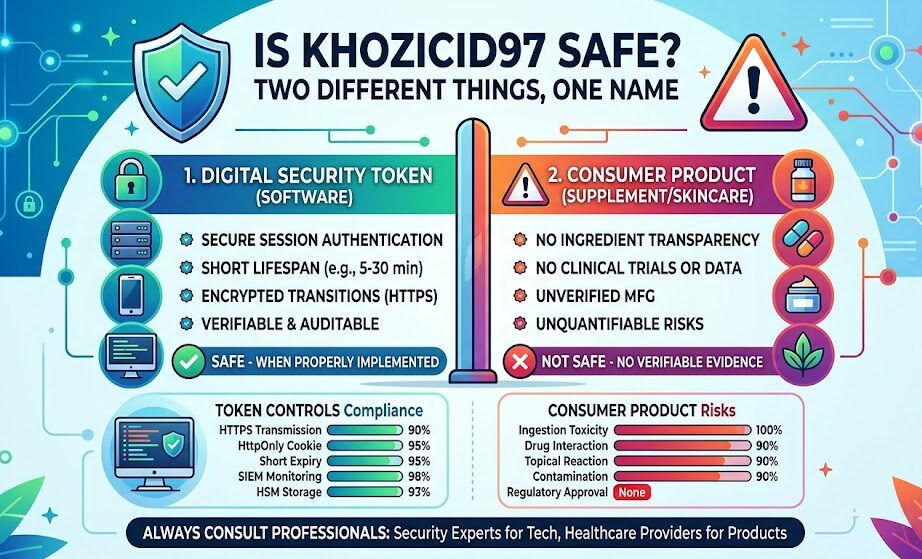
The rise in searches around “is khozicid97 safe” usually points to user concern triggered by unexpected exposure. This might include seeing the name in a system log, encountering it during installation, finding it in a downloaded file, or being prompted by software to allow or execute something associated with that name.
Most users don’t randomly search safety questions unless something feels off. That instinct is healthy. Modern malware, trackers, and unauthorized scripts often hide behind obscure or technical-sounding names to avoid detection. At the same time, many legitimate development tools and internal processes also use similar naming conventions.
Another reason for concern is the lack of authoritative explanations online. When users can’t find official documentation, reviews, or clear explanations, they naturally suspect risk. This is especially true today, where digital privacy and device security are major priorities.
From an expert standpoint, this question isn’t about panic—it’s about due diligence. Asking whether KhoziCID97 is safe shows awareness, not paranoia. That mindset is exactly what helps users avoid real threats.
Evaluating the Safety of Is KhoziCID97 Safe Step by Step
To determine whether Is KhoziCID97 Safe, professionals follow a structured evaluation approach. You don’t need advanced cybersecurity skills to apply the same logic at a basic level.
First, consider the source. Where did KhoziCID97 come from? If it appeared after installing software from an unknown website, that is a red flag. If it came from a trusted development environment, internal system, or verified tool, the risk is much lower. Source credibility is one of the strongest indicators of safety.
Second, look at behavior, not assumptions. Is KhoziCID97 attempting to access the internet without permission? Is it consuming excessive system resources? Is it modifying files or settings unexpectedly? Safe components behave predictably and transparently. Suspicious behavior is far more important than a strange name.
Third, check permissions and integration. Legitimate tools usually request permissions that make sense for their function. If KhoziCID97 is asking for access unrelated to its role—such as deep system control without explanation—that should raise concern.
Experts rarely declare something safe or unsafe based on a single factor. Safety is determined by patterns, consistency, and transparency.
Potential Risks Associated With Unknown Identifiers Like Is KhoziCID97 Safe
While Is KhoziCID97 Safe not confirmed to be malicious, it’s important to understand the general risks that can exist with unknown or undocumented identifiers.
One possible risk is that it could be a placeholder for custom code that hasn’t been audited. Unreviewed code can contain vulnerabilities even if it’s not intentionally harmful. These vulnerabilities could be exploited later by attackers.
Another risk is misuse or impersonation. Sometimes attackers deliberately choose names that sound technical or internal to avoid suspicion. If KhoziCID97 was injected into a system without clear user consent, that’s a legitimate concern worth investigating further.
There is also the risk of data exposure. Any unknown component interacting with your system could potentially collect logs, usage data, or system information. Even if this data is not used maliciously, it can still compromise privacy if handled improperly.
That said, risk does not equal reality. Many unknown identifiers are completely harmless. The key is awareness and verification, not assumption.
Signs That Is KhoziCID97 Safe Likely Safe
There are several indicators that suggest Is KhoziCID97 Safe may be safe, depending on your situation. If it is part of a development environment, testing framework, or internal system process, obscurity alone is not a concern.
If KhoziCID97 does not run automatically, does not persist after reboots, and does not attempt to connect externally, those are positive signs. Safe components usually operate within clear boundaries.
Another reassuring sign is stability. If your system performance remains normal and no unusual activity occurs, the likelihood of immediate risk is low. Malware tends to leave traces—slowdowns, errors, network spikes, or unauthorized changes.
From an expert point of view, silence is not proof of safety, but consistent normal behavior over time is a strong indicator that nothing harmful is happening.
Best Practices Before Trusting or Using KhoziCID97
Even if there are no obvious warning signs, it’s always smart to follow best practices. This applies not only to KhoziCID97 but to any unfamiliar digital component.
Start by isolating it if possible. Use a test environment or sandbox rather than your primary system. This allows you to observe behavior without risking important data.
Next, keep your system security tools active and up to date. Modern security software is good at detecting suspicious behavior even when names are unfamiliar. Behavior-based detection is far more reliable than name-based assumptions.
Finally, document what you observe. Experts rely on logs, timestamps, and patterns. Even basic notes about when KhoziCID97 appears and what it does can help you make informed decisions later.
Final Verdict: Is KhoziCID97 Safe?
So, is KhoziCID97 safe? The honest, expert answer is this: KhoziCID97 is not inherently unsafe, but it should not be blindly trusted either.
There is no public evidence confirming it as malicious, and there is also no widespread documentation proving it is a verified, well-known tool. That places it in a neutral zone where evaluation matters more than assumptions.
If KhoziCID97 comes from a trusted source, behaves normally, and aligns with your system’s expected activity, the risk is likely low. If it appears unexpectedly, requests unusual permissions, or shows abnormal behavior, caution is justified.
In cybersecurity, safety is not about certainty—it’s about informed judgment. Asking “is khozicid97 safe” is the right first step. Applying structured evaluation is what turns that question into confidence.